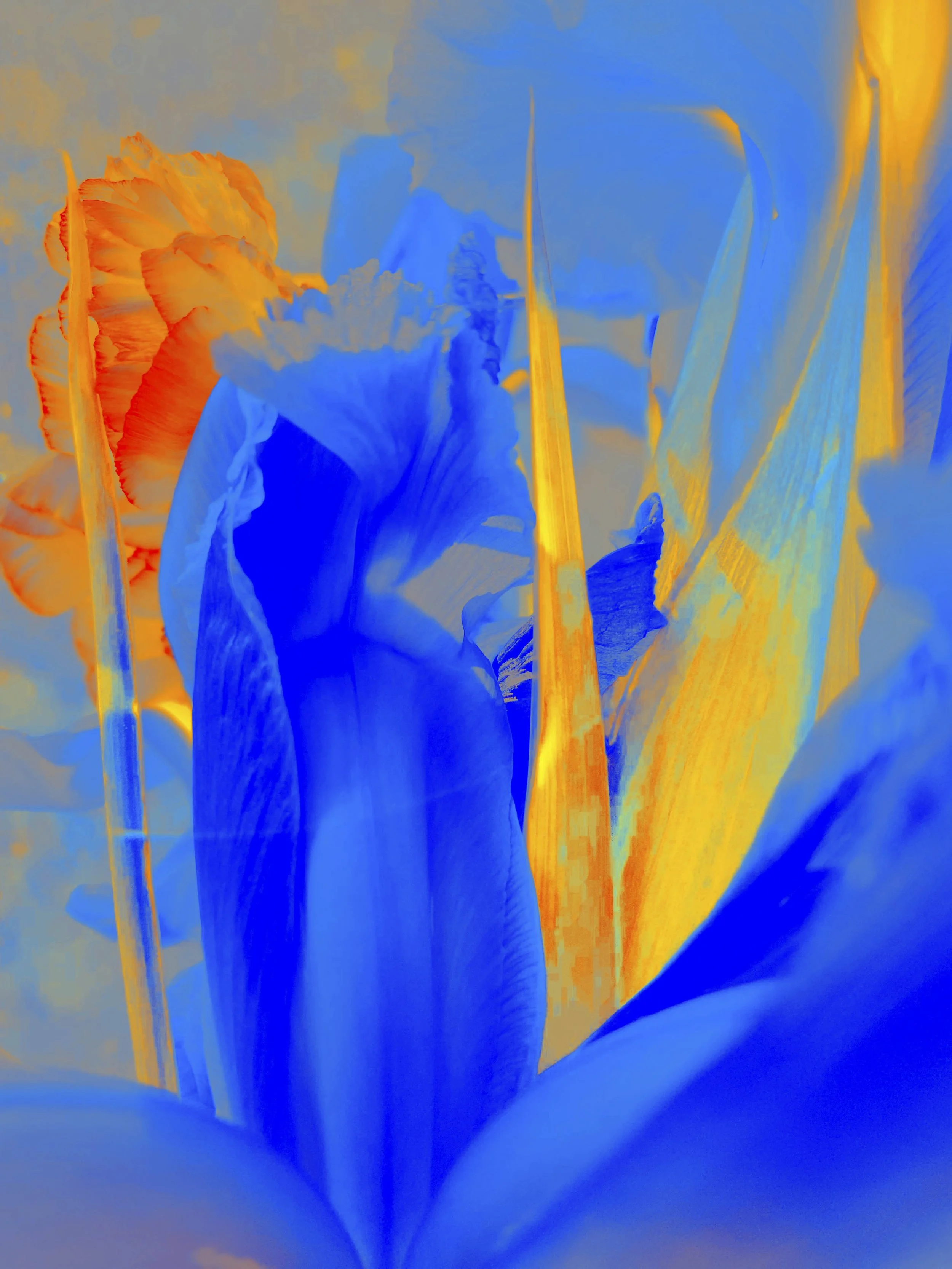
aguçando alegria
2025
Samba is exhilarating.
Samba, the most popular Brazilian rhythm, is known to directly descend from batuque — percussion rhythms and circle dances performed by African people forcibly taken to Brazil by Portuguese colonisers to work in colonial plantations. It is widely believed that in the early seventeenth century, enslaved Africans began to perform samba as rhythmic dances to disguise their religious rituals. Samba is the prayer done through the body, by the body. To this day, samba continues to be used as a joyful form of resistance to marginalisation. Samba also ruptures any fixed categories that give the impression that ancestry or spirituality are static, when in truth both are alive and in movement, like diasporic bodies themselves.
It is under this ethos of joy as resistance that the installation A pangeia do não-permanecer onde o despregar de Odús do céu e o extrapolar de sonhos acontecem na alvorada (A pangaea of non-permanence where the release of fates from the sky and the transcending of reveries that happen at first light) rests. The work acts as a disowning of the anguish caused by marginalisation, and a reclaiming of the nuances of my own stories, languages, and ways of knowing that multicultural representation often leaves at the threshold.
Freeing myself from any censorship, I invoke my Afro-Brazilian ancestry and spirituality to samba with me in a roda de samba, or samba circle. I also invite the community to allow the bodily gestures from the textile works to touch them: to be touched by, and to dance with, otherness.
The installation features photographic imagery as suspended textile pieces with hand embroidery, and two accompanying short films. The suspended textile mimics a samba circle where Afro-Brazilian communities gather in a ritual of music and dance.I chose textiles for their deceptive simplicity, which carries a potential for subversion. Embroidery and textile works have historically been segregated in social and artistic canons to notions of femininity, inculcating female subservience; perceived as craft rather than art. Fabric also holds connotations of care, the curative, and solace, while serving to conceal what cannot be freely expressed. The choice of diaphanous fabrics is twofold: it reveals repressed voices and stories while concealing sacred aspects of my ancestry. The hand embroidery traces the migratory movements and spatial memory of my ancestors that become interwoven with my own.
The two short films, installed outside the suspended works, see through the body and its heat. I chose film alongside photography to challenge their sociohistorical and colonial legacies, and their relationships to collective notions of truth, creating tension when placed together with the textile works — and in doing so, working to transcend the European dichotomy between art and craft.
The photographic images, printed as dye sublimation on organza, and the short films were made both in my hometown in Brazil, and in Australia. They become a record of the discovery that instead of being trapped in an in-betweenness, I can find joy in being in two places at once. The films are purposely silent. Embodied seeing becomes a form of listening, reclaiming the oral and the sensorial against the primacy of Eurocentric written records.
The film O arrebatamento do anfiguri na central quase aberta (The rapture of the anfiguri in the near-open central) imagines joy as pleasure: an orgasm recorded from inside the body before the moment of climax, the gaze entirely the body's own. The film A origem de desenhos de íris nas coxas de pirilampos (The origin of drawings of irises on fireflies' thighs) evokes joy as a fever of being in and with the world, dancing.
Samba allows for a form of knowledge that adapts to migratory movements and understands transformation not as an obstacle to be avoided, but as a principle that governs reality.
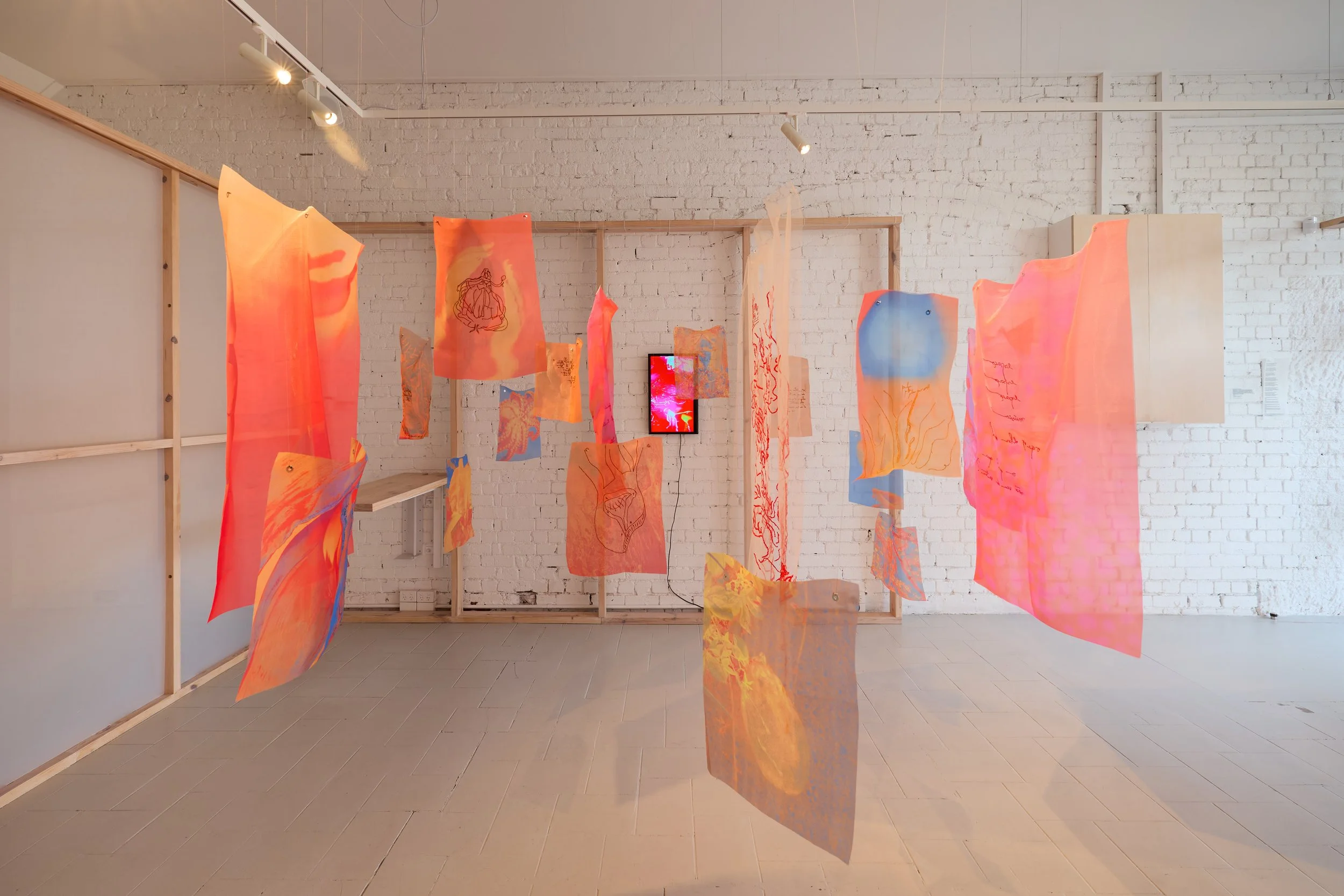
Installation view of single channel video O arrebatamento do anfiguri na central quase aberta (The rapture of the anfiguri in the near-open central), and installation A pangeia do não-permanecer onde o despregar de Odús do céu e o extrapolar de sonhos acontecem na alvorada (A pangaea of non-permanence where the release of fates from the sky and the transcending of reveries that happen at first light) 2025. Mixed media, dimensions variable.
Inciting Joy/ Aguçando Alegria residency at correspondences Studio, Melbourne / Naarm, Australia.
Image credit: Stephanie Duncan.
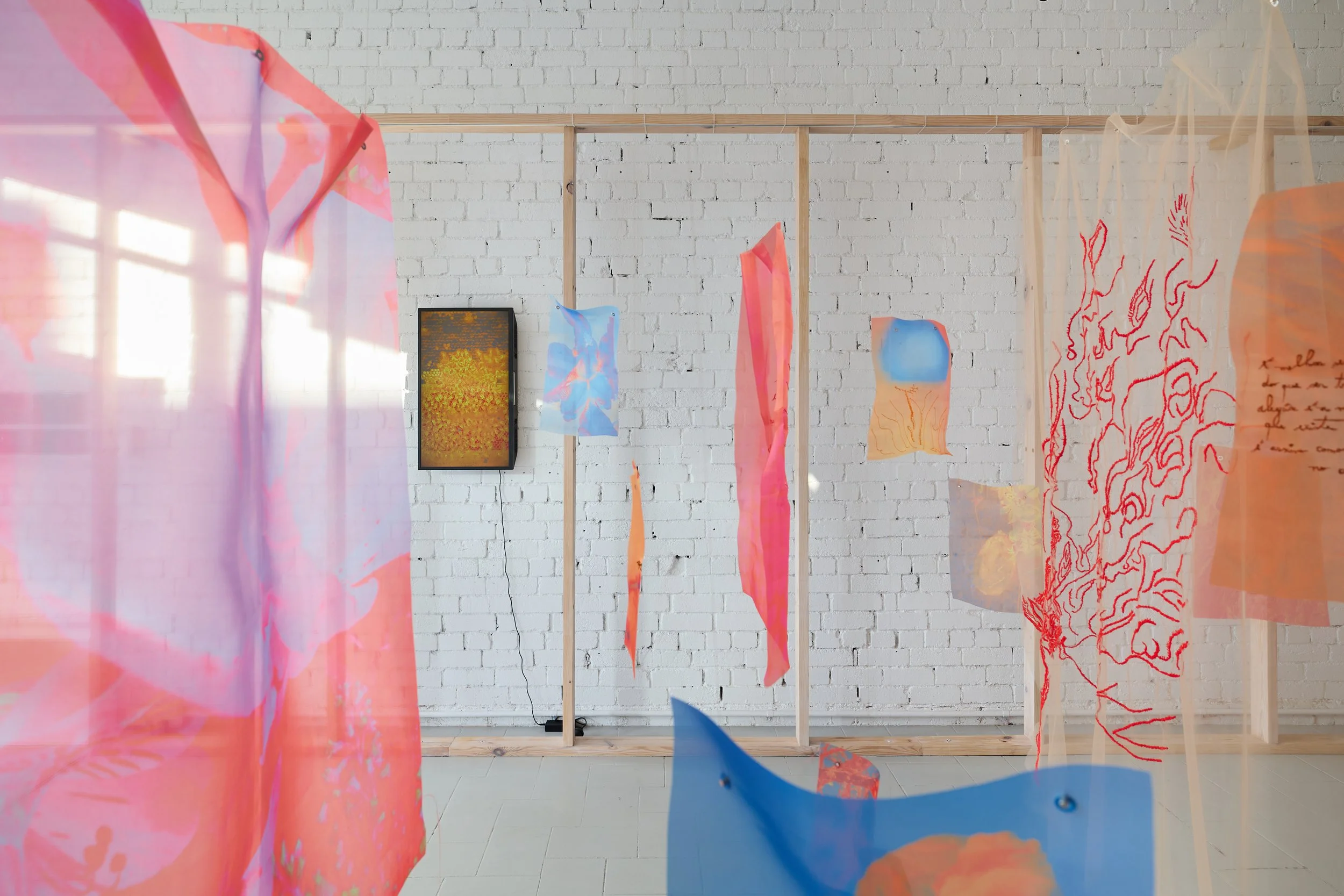
Installation view of single channel video A origem de desenhos de íris nas coxas de pirilampos (The origin of drawings of irises on fireflies’ thighs) installation A pangeia do não-permanecer onde o despregar de Odús do céu e o extrapolar de sonhos acontecem na alvorada (A pangaea of non-permanence where the release of fates from the sky and the transcending of reveries that happen at first light) 2025. Mixed media, dimensions variable.
Inciting Joy/ Aguçando Alegria residency at correspondences Studio, Melbourne / Naarm, Australia.
Image credit: Stephanie Duncan.

Still of
A origem de desenhos de íris nas coxas de pirilampos
(The origin of drawings of irises on fireflies’ thighs)
Single Channel Video, colour, no sound, 3 min and 50 sec